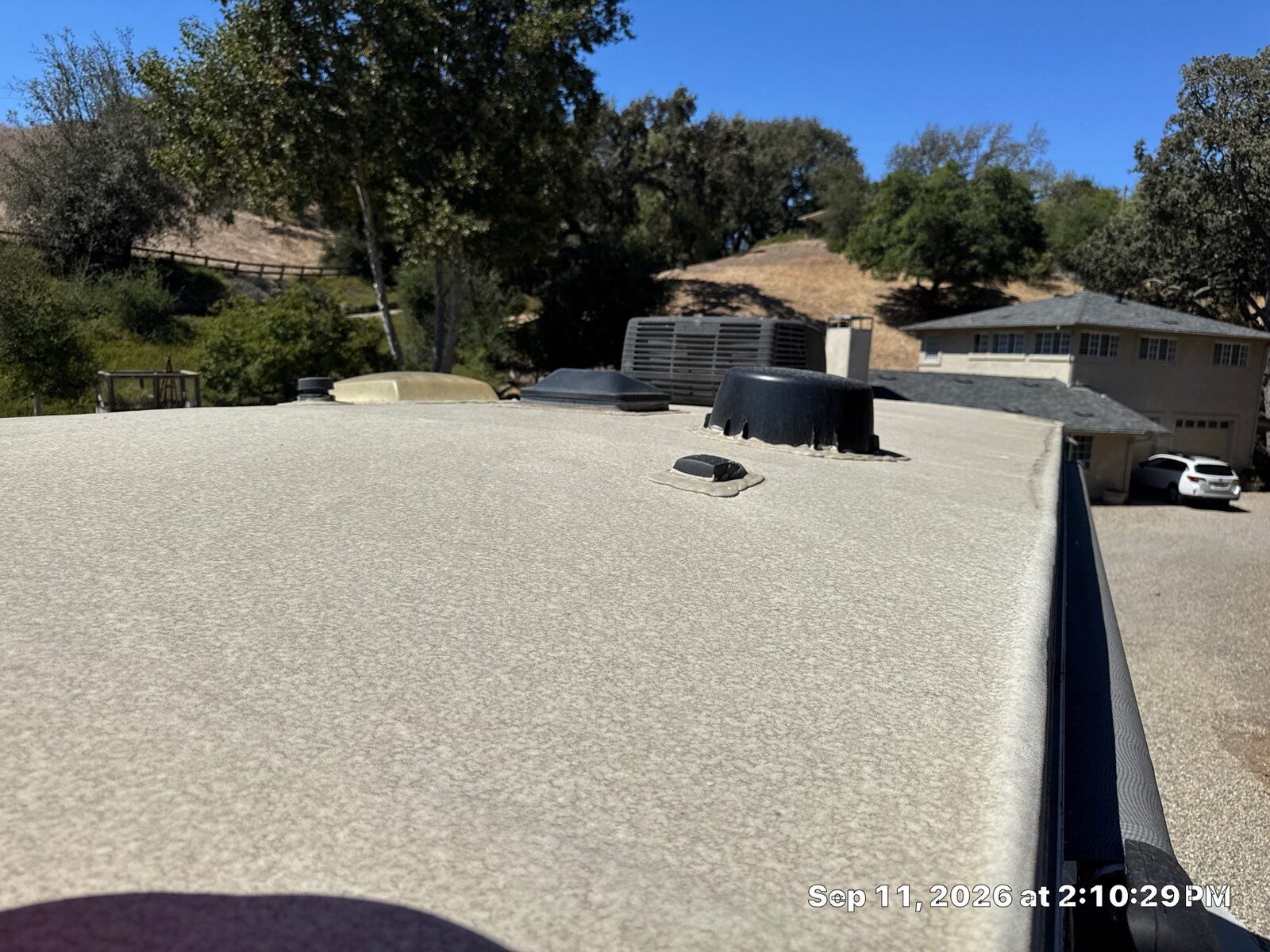
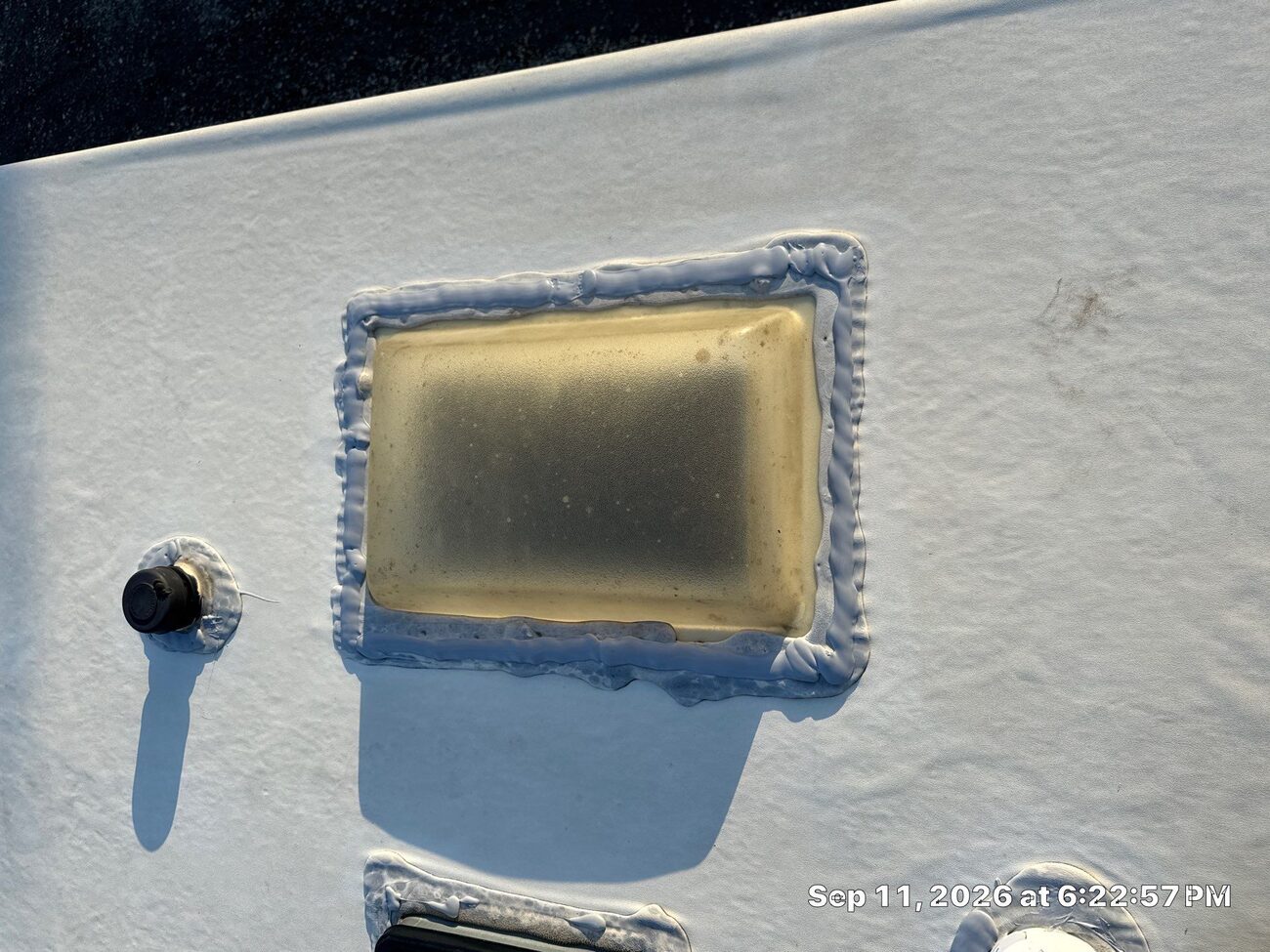
Before: the tan Alpha Systems TPO roof on a 2019 Grand Design Solitude — sound, but with lap sealant overdue for service heading into a wet winter.
Quick answer
A Santa Ynez Valley owner had us service their 2019 Grand Design Solitude roof before the winter rains. The Alpha Systems TPO membrane was still in good shape for a seven-year-old coach — but the lap sealant around the roof fixtures had never been serviced and was starting to crack. We deep-cleaned the roof, completely resealed the front cap, and spot-treated the rest of the seals to close up the cracks before a drop of rain could find them.
Forecasters are pointing to a wet El Niño winter on the Central and South Coast this year. If you own an RV, the roof is the one place where a small, ignored problem quietly turns into an expensive one — and it almost never starts in the middle of the roof. It starts at the lap sealant: the bead of sealant around your vents, skylights, A/C, antenna, and front cap. That's the part that dries out, cracks, and lets water in.
This owner did the smart thing and got ahead of it. Here's the job.
The rig: a well-kept 2019 Solitude
The coach was a 2019 Grand Design Solitude 310GK fifth wheel — seven model years old, and clearly cared for. Grand Design builds these on a Lippert Alpha Systems SuperFlex roof, which is a TPO membrane (thermoplastic polyolefin, an olefin-based single-ply membrane) in a tan color. The good news up top: the membrane itself was in genuinely good condition for its age — no tears, no soft spots, no failing seams. That's a testament to how the owner stored and maintained the rig.
What we found: the sealant was the weak link
Here's the catch, and it's a common one. In seven years, the lap sealant had never been attended to. And while we were on the roof working, it was showing exactly what age does to sealant: weathering, and the beginnings of cracks in several locations around the roof fixtures. A membrane can look great while the sealant quietly ages out from under it. Sealant doesn't last the life of the roof — it's a maintenance item, and hairline cracks around a vent or the front cap are all it takes for a wet winter to work its way into the wood decking below. By the time you see a stain on the ceiling inside, you're usually looking at rotted decking instead of a tube of sealant.
What we did
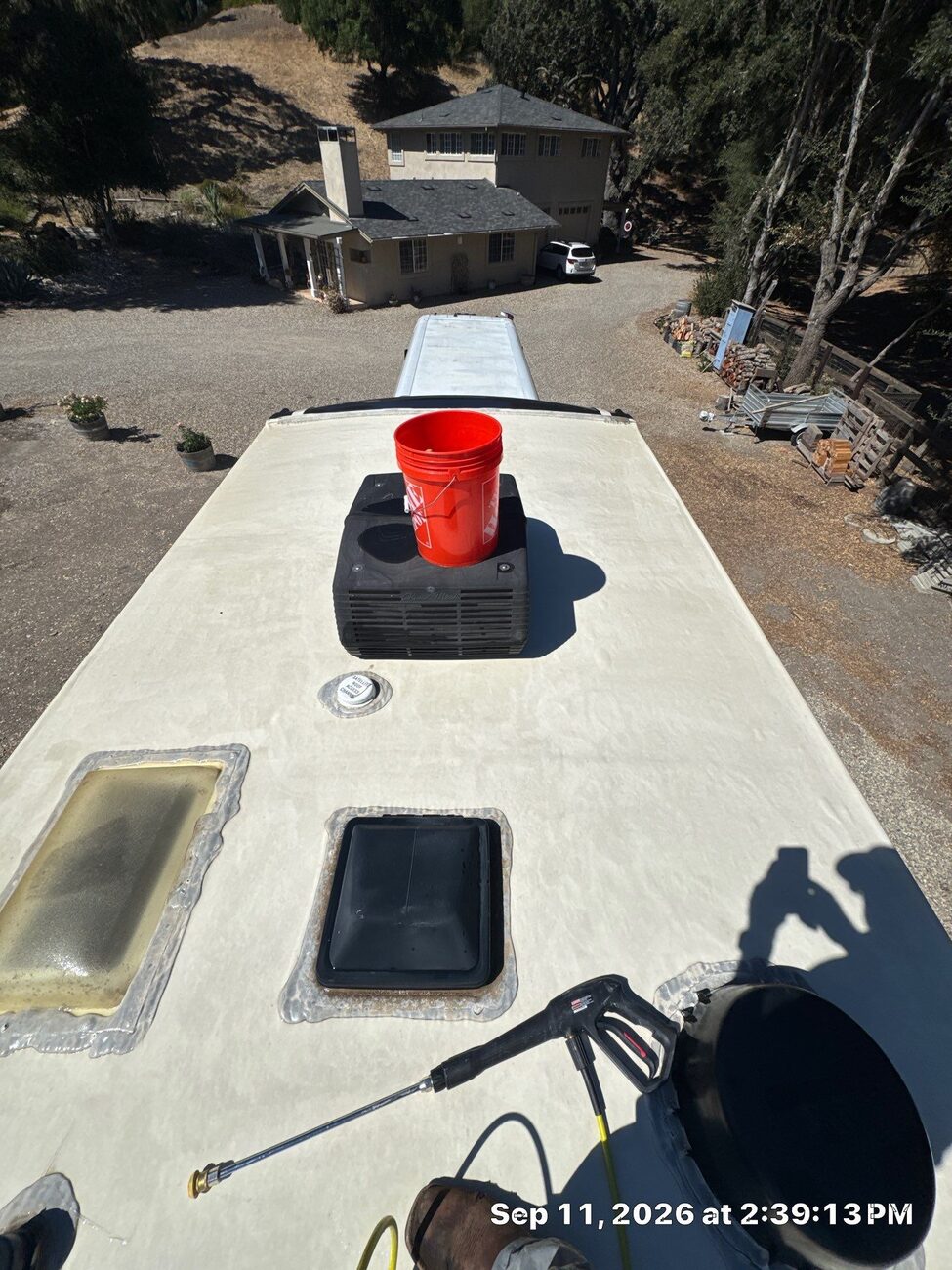
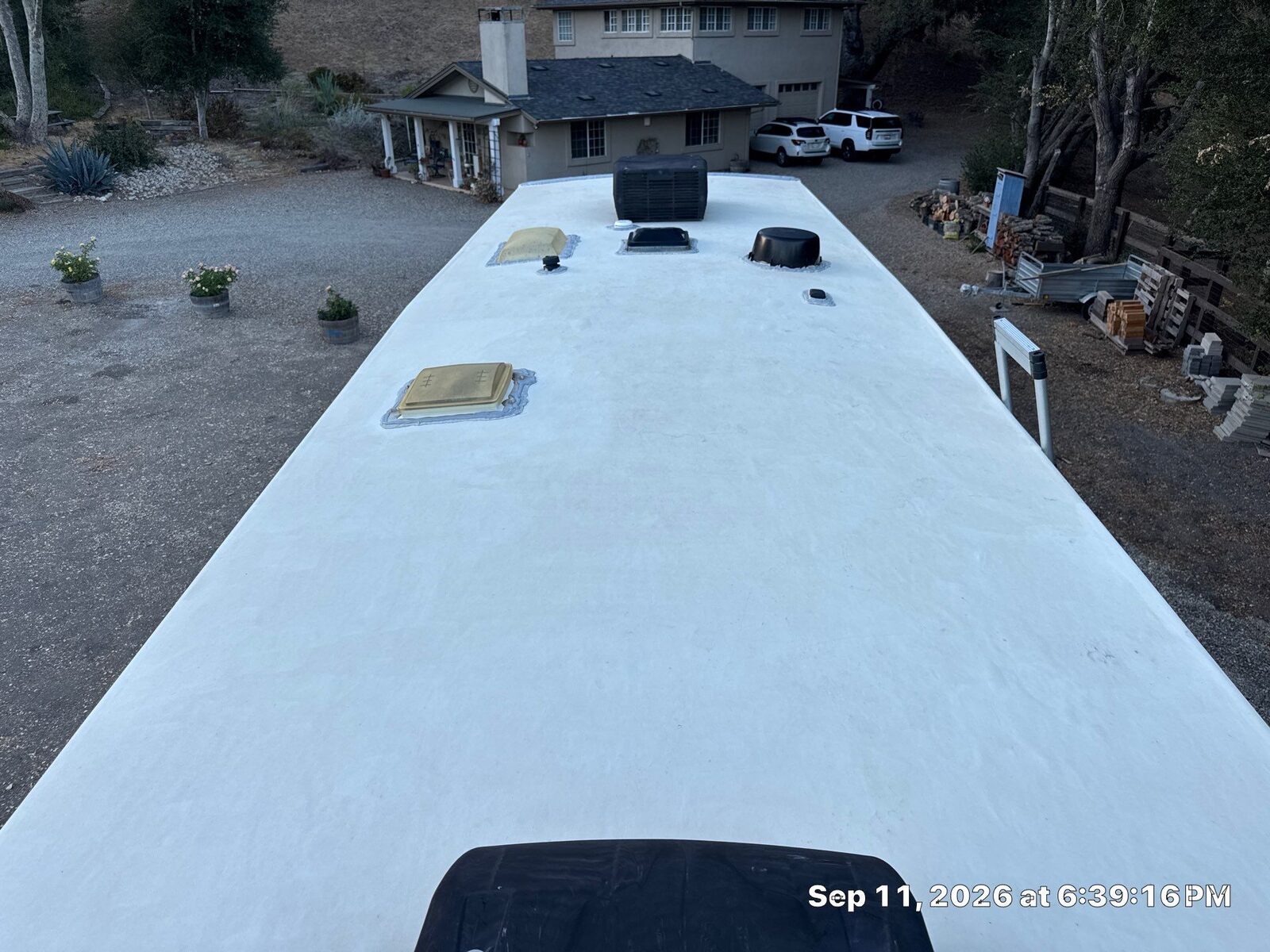
We treated it like the preventive job it was — thorough, not destructive. We deep-cleaned the entire membrane and all of the existing lap sealant so fresh sealant would bond and every seam was visible. We completely resealed the front cap — the leading edge that takes the worst of the sun, wind, and highway weather — with a self-leveling lap sealant matched to the TPO roof. And we spot-treated the remaining seals around the vents, skylights, A/C shroud, and roof penetrations, sealing over the cracks and holes that had started to open up.
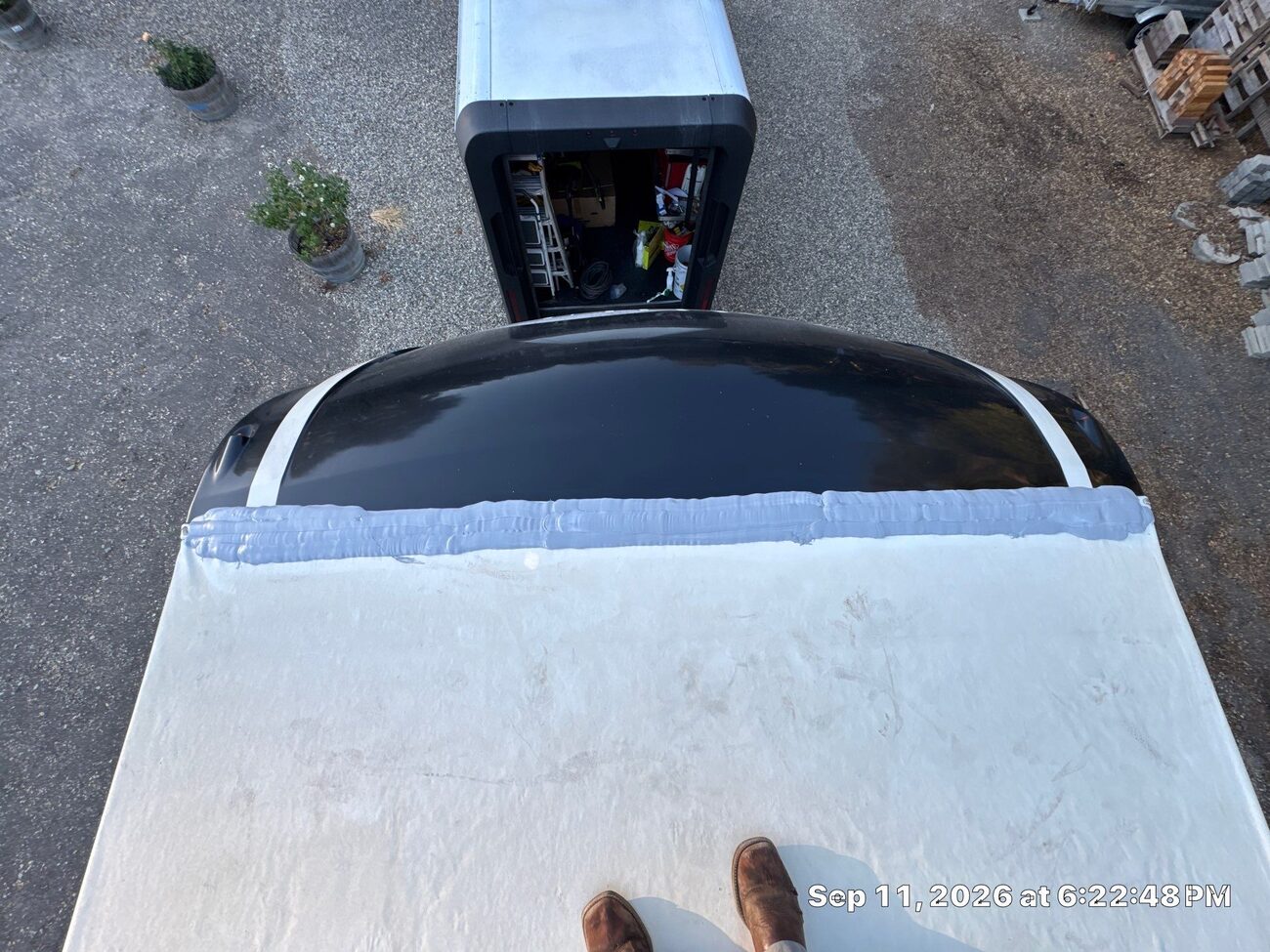
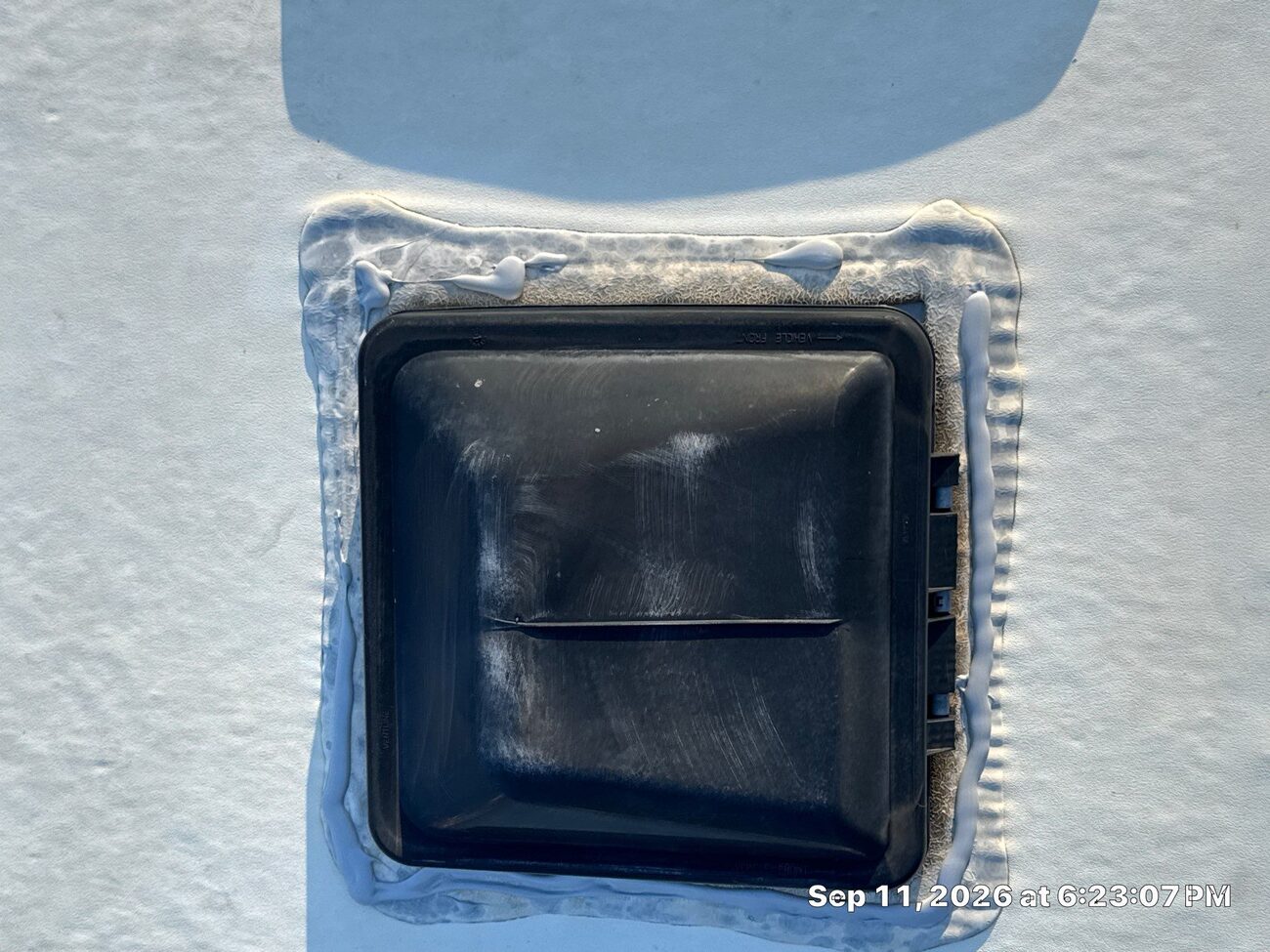
The result: a clean roof with sound, sealed seams heading into the rainy season — and an owner who spent a service call instead of a decking-and-delamination repair down the road.
Why this is the job to do now
Lap sealant is the number-one leak path on an RV roof, and late summer into early fall is the window to deal with it — before the storms, while the roof is dry enough to clean and seal properly. A few tubes of sealant and an afternoon of work is the cheapest insurance you'll ever buy against a rotted roof.
If you want the full DIY walkthrough — how to inspect your own seals, what sealant to use, and when to call a pro — we wrote it up here: Is Your RV Roof Ready for the Rain? A Pre–El Niño Roof Checkup. And if you'd rather have trained eyes on it, that's what we do.
Is your roof ready for this winter?
If your RV's lap sealant hasn't been looked at in a few years, now's the time — while the roof is still dry enough to clean and seal properly. We're fully mobile and bring the work to you across the Santa Ynez Valley and the rest of Santa Barbara & Ventura Counties.
RV roof reseal FAQ
How often should RV roof lap sealant be resealed?
Inspect your roof and all of its seals at least twice a year and before the rainy season. The lap sealant around vents, skylights, the A/C, and the front cap is a maintenance item that weathers and cracks well before the membrane wears out — often needing attention every couple of years even when the roof itself is still in good shape. Reseal it as soon as it starts to weather or crack; don't let cracked sealant go into a wet winter.
Do you do RV roof cleaning and resealing at my location?
Yes. Lavender Mobile RV Solutions is fully mobile — we bring roof cleaning and resealing to your driveway, storage lot, or campsite across Santa Barbara and Ventura Counties, including the Santa Ynez Valley (Solvang, Buellton, Santa Ynez), Goleta, Santa Barbara, Carpinteria, Ojai, and Ventura. Every job starts with a free phone consultation.
Do you work on TPO and Alpha Systems RV roofs?
Yes. Many fifth wheels and motorhomes — including Grand Design coaches — use a Lippert Alpha Systems TPO membrane, and we also service EPDM rubber and fiberglass roofs. We match the self-leveling lap sealant to your specific membrane type so it bonds correctly and lasts.
Get your roof checked before the rains
We're a Master Certified mobile RV service covering Santa Barbara & Ventura Counties — the Santa Ynez Valley, Santa Barbara, Goleta, Carpinteria, Ojai, and beyond. We come to you. Start with a free phone consultation and we'll tell you whether it's a quick reseal or something more.
Get a Free Estimate Call 833-RVTECH-4